
Zohran and the Big (Red) Apple

Updated: Nov 11, 2025
Here's a fun little word to add to our vocabulary: Demagoguery
dem·a·gog·uer·y
/ˈdeməˌɡäɡ(ə)rē/
-----------------------
noun: Political activity or practices that seek support by appealing to the desires and prejudices of ordinary people rather than by using rational argument.
Now let's use our new word in a sentence!
Less than a week after becoming mayor-elect of New York City, Zohran Mamdani - a card-carrying member of the Democratic Socialists of America party - is engaging in demagoguery.
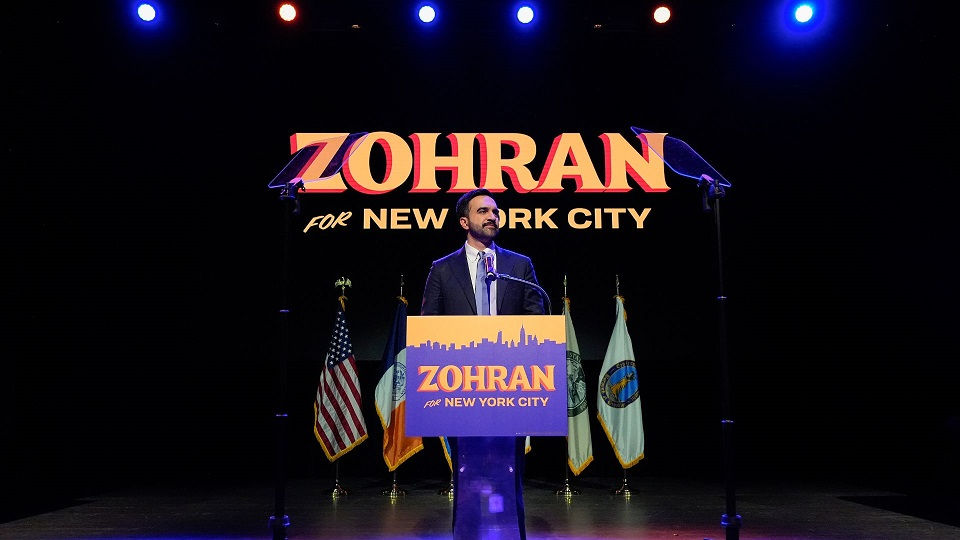
Well, New Yorkers . . . What did you expect?
Among many other things that give off a whiff of sulfur, Mamdani is running around NYC, trumpeting his proposals for rent control.
Due to a fundamental lack of understanding of basic economics or history, many New Yorkers are cheering Mamdani's move without realizing its motive - or likely consequences.

Make no mistake: Historical implementations of rent controls have always resulted in:
increased housing shortages; and
more harm to the very people that the program proclaims to help
Anyone with an informed opinion on this subject knows these results to be true. It's been demonstrated over and over again. So, why would Mamdani advocate a program that never works, and has always made people's lives worse?
Is it because Mamdani is idealistic and naive?
Hardly. Mamdani is no dummy. He's surfing the socialist wave, for sure. Cowabunga, dude!
Although it should be said: Some of Mamdani's supporters may indeed be idealistic and naive. This may or may not be excusable.
If the lessons of history fail to provide food for thought for anyone, perhaps a quick economics perspective might help people avoid getting suckered by socialists and steer clear of demagoguery trap.
In the spirit of helping those who might need it, here's a simple explanation of how rent control works, provided by teacher and writer, Nathalie Elgrably-Lévy:
1. People tend to respond to incentives. Price is one type of incentive.
2. Tenants and Landlords are people. They therefore respond to prices as incentives. The price in the case of Tenants and Landlords is called "rent."
3. When the price of any good or service is low, consumers are incentivized to purchase more of it - because it's considered affordable.
4. When the price of any good or service is low, sellers are usually incentivized to sell less of it - because it's considered less profitable. The exception is the case where the volume of goods and services can be drastically increased.
5. Low rents encourages demand for housing from tenants.
But with rent controls in place, existing tenants cling to their existing housing to take advantage of frozen rents, even if it no longer fits their needs.
The result is reduced mobility and fewer opportunities to acquire housing for young people, immigrants, etc.
6. Keeping rents low with rent controls discourages the supply of housing from landlords.
Landlords no longer have an incentive to maintain or renovate, since every dollar invested will never be recouped. The quality of rental housing units deteriorates.
Landlords make up for their shortfall by charging higher application fees, increased security deposits, and/or by selecting only "low-risk" tenants. In some cases, Landlords must remove rental properties from the market so they can show a deductible loss at tax time (by reducing rental income to zero for those properties).
New investors steer clear of the rental market, discouraged by the limited profitability. Increasing the number of available rental properties to multiply small per-unit profits is usually not a practical option - especially in cities where physical real estate is finite.
The result is fewer housing units that are available for everyone. The housing shortage worsens, which ends up harming the very people that were supposed to be helped - namely, the most vulnerable.


